How to Track AI Search Engine Citations: The 2026 Guide
Four ways to know when ChatGPT, Gemini, Perplexity, and Google AI Overviews cite your site — with the pros, cons, and exact setup for each.
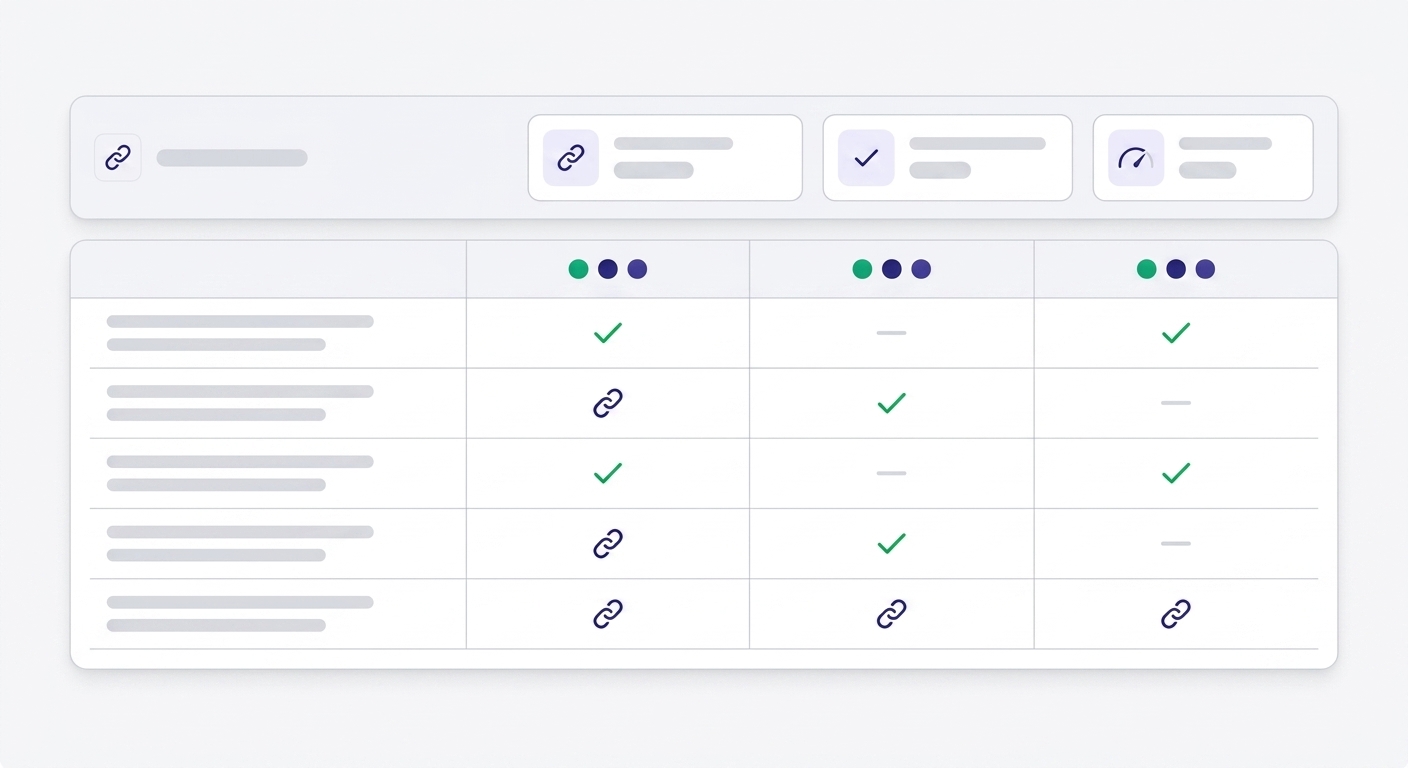
Start with product-level citation tracking
SearchMention runs your buyer prompts against ChatGPT, Gemini, and Perplexity and shows which products get cited — plus the readiness fixes that close the gap.
See how SearchMention worksA few years ago, "tracking your search visibility" meant one thing: checking your Google rank. In 2026, the search landscape has fragmented. Real shoppers and researchers now ask ChatGPT, Gemini, Perplexity, and Google's AI Overviews "what's the best running shoe under $100" or "best CRM for a 5-person team" — and the AI answers with a short list of brands, often with clickable source citations.
If your brand isn't in that answer, you don't exist for that query — even if you rank #2 organically.
The problem: there's no Google Search Console for AI. There's no single dashboard that says "ChatGPT cited you 142 times this week for these 18 prompts." So tracking AI citations is something you have to actively set up. This guide walks through the four approaches that work today, when each one makes sense, and what they cost in time, money, and accuracy.
TL;DR
- Manual prompt testing — free, doesn't scale beyond 5–10 prompts.
- Server logs & referrer analysis — captures real traffic, misses zero-click citations.
- Brand mention monitoring — good for press, weak for AI prompts.
- Dedicated AI visibility tools — only method that gives you share-of-voice across models, run-over-run trends, and competitor benchmarks.
Why AI citations are the new ranking
AI assistants don't return ten blue links. They return an answer — and inside that answer they cite somewhere between zero and a dozen sources. Being one of those sources matters for three concrete reasons:
- Direct referral traffic. When users click a citation in ChatGPT, Perplexity, or Gemini, that hit shows up in your analytics with referrers like
chatgpt.com,perplexity.ai, orgemini.google.com. Conversion intent on this traffic is unusually high — the user already framed the question and the AI already pre-qualified you. - Brand authority by association. Even when nobody clicks, being named in the answer ("brands like X, Y, and Z…") imprints your brand on the user. Think of it as the modern version of being on a "best of" list.
- Compounding effects in training. Pages that get cited often tend to get re-cited. If your URL becomes the canonical source for "how to do X," competitors have to either out-cite you or settle for second place.
Method 1 — Manual prompt testing
Cost: $0 · Time: high · Accuracy: low (single-snapshot)
The simplest way to track AI citations is to open ChatGPT, Gemini, and Perplexity in three browser tabs and ask the prompts your customers ask: "best running shoes under $100," "leak-proof water bottle for hiking," "CRM software for solopreneurs." Note which brands and URLs each model returns.
When to use it
- You're just starting and want a gut check before investing in tooling.
- You want to qualitatively understand why the AI picked a competitor (read the cited URLs).
- You want to test a single new product launch or campaign.
The honest downsides
- Run-to-run variance. The same prompt gives different answers on different days, sometimes within hours.
- Personalization noise. Logged-in ChatGPT and Gemini results are biased by your own history. Always test in incognito or a clean profile.
- It doesn't scale. Tracking 30 prompts × 3 models × weekly = 90 manual checks a week. Nobody does this for long.
A 10-minute starter exercise
- Brainstorm 10 prompts a real customer would type before buying from you. Mix branded ("best alternative to {competitor}") and non-branded ("best X under $Y").
- Run each in ChatGPT, Gemini, and Perplexity (incognito).
- Log results in a spreadsheet: prompt, model, were-you-mentioned (Y/N), competitors mentioned, cited URL.
- Sanity-check whether your top organic SEO pages are the ones being cited — they often aren't.
If this exercise reveals a gap (it almost always does), graduate to one of the next three methods.
Method 2 — Server logs & AI referrer analysis
Cost: $0–$50/mo · Time: medium (one-time setup) · Accuracy: medium (clicks only)
AI assistants leave fingerprints. Their crawlers identify themselves with predictable user-agents (GPTBot, OAI-SearchBot, PerplexityBot, ClaudeBot, Google-Extended), and when a user clicks a citation, the request arrives with a referer like https://chatgpt.com/, https://www.perplexity.ai/, or https://gemini.google.com/.
Two things to track:
- Crawler activity — proves the AI can index you. Filter your access logs (or Cloudflare/Vercel/Fastly logs) by these user-agents and chart hits per day per page. A sudden spike on a URL usually precedes citations.
- AI referrals — proves the AI did cite you and someone clicked. In GA4 or your analytics tool, segment Acquisition by referrer hostname.
User-agents to watch
| User-agent | Owner | Purpose |
|---|---|---|
OAI-SearchBot | OpenAI | ChatGPT search index |
GPTBot | OpenAI | Training crawler |
ChatGPT-User | OpenAI | Live browsing on a user's behalf |
PerplexityBot | Perplexity | Index + answer crawler |
Perplexity-User | Perplexity | Live fetch during answer generation |
ClaudeBot | Anthropic | Training + retrieval |
Google-Extended | Gemini training opt-in token | |
Applebot-Extended | Apple | Apple Intelligence training |
When to use it
- You already have a CDN (Cloudflare, Vercel, Fastly) or web logs and can filter by user-agent.
- You want to verify that fixing your
robots.txtor schema actually drove more crawls. - You want to see downstream impact: did this surge in citations convert to revenue?
The gap it leaves
Logs only show citations that got clicked. Most AI answers are zero-click — the user reads the answer, sees your brand named, and never visits. Logs underestimate your true visibility, often by 5–10× depending on industry.
If you're on Cloudflare, our free Cloudflare Worker ships AI bot & referrer events to a single dashboard so you don't have to roll your own log parser.
Method 3 — Brand mention monitoring
Cost: $0–$200/mo · Time: low · Accuracy: low for AI specifically
Tools like Google Alerts, Mention, or Brand24 watch the open web for instances of your brand name. They'll catch press, social posts, and Reddit threads — useful inputs since AI assistants weight those sources heavily.
The catch: these tools watch the web, not LLM output. They tell you what content about your brand exists for AI to ingest. They do not tell you whether ChatGPT actually mentions you when a user asks a question.
When to use it
- You're building a media presence and want to track press / Reddit / forum mentions that feed AI training data.
- You already use one for PR — keep it, just don't expect it to cover AI prompts.
Method 4 — Dedicated AI visibility / citation tracking tools
Cost: $29–$500/mo · Time: low (after 5-min setup) · Accuracy: high
The mature approach is the same one that works for traditional SEO: define a list of high-intent queries, run them on a schedule, parse the results for your domain (and your competitors), and chart the trend.
A dedicated AI visibility tool — like SearchMention, Profound, Otterly.ai, Peec, or Conductor's AISO module — automates this. It calls the AI APIs directly (or simulates real prompts) on a weekly or daily cadence and gives you:
- Citation rate per prompt per model — "we're cited in 6/10 ChatGPT runs but 0/10 Gemini runs for 'best vegan protein powder.'"
- Share-of-voice vs competitors — "Brand A wins 38% of our tracked prompts, we win 22%."
- Run-over-run change — does last week's schema fix actually move citation rate?
- Sentiment — when you are mentioned, is the AI describing you positively, neutrally, or negatively?
A typical setup workflow (any tool, ~15 min)
- Connect your domain. Most tools either ask for a URL or import directly from your sitemap.
- Generate or paste your prompt list. Aim for 15–30 prompts your buyer would actually ask, mixing category-level ("best CRM for startups") with use-case ("CRM under $50/user").
- Add 3–5 competitors. Without competitors you'll see your own rank but not the size of the gap.
- Pick your models. ChatGPT and Gemini are table stakes; add Perplexity for research-heavy industries.
- Set a schedule. Weekly is plenty for most brands. Daily only matters if you're actively shipping changes and want fast feedback.
When to use it
- You're past the "is this even worth it?" question and want to invest in AI search as a real channel.
- You want to attribute fixes (schema, robots.txt, content) to actual citation movement, not just bot crawls.
- You have competitors and need a benchmark, not a vibe.
Before you track citations: are you even crawlable?
There's no point in tracking citations you can't earn. Before any of this, make sure ChatGPT, Gemini, and Perplexity can actually read your site. The most common blockers we see:
- A
robots.txtthat disallowsOAI-SearchBot,GPTBot, orClaudeBot(often inherited from a default Shopify / Magento / WP install). - Product pages without complete
ProductJSON-LD (nobrand, nooffers, noaggregateRating). - A site that returns 200 to humans but 403 to bots due to bot-protection rules.
Run a free 30-second readiness scan against any URL — we'll tell you which AI bots can reach you, what schema is missing, and what to fix first.
AI-Readiness Scorecard
Is your store invisible to ChatGPT, Claude, and Gemini?
Which method should you actually use?
| If you… | Start with | Add later |
|---|---|---|
| Are testing the waters / pre-revenue | Manual prompt testing | Free AI readiness scan |
| Have a live storefront and traffic | Server logs + GA4 referrer reports | Dedicated tool once you're shipping fixes |
| Compete in a category with named rivals | Dedicated tool with competitor tracking | Brand monitoring for press signals |
| Run paid SEO/SEM agencies | Dedicated tool with API export | Wire AI rank into your existing dashboards |
Frequently asked questions
What is an AI search engine citation?
A citation is when a generative AI system (ChatGPT, Gemini, Perplexity, Google AI Overviews, Claude) references your website inside its answer — either as a clickable source link, a brand mention in the prose, or both. Citations are the AI-era equivalent of a SERP ranking.
Can I track AI citations in Google Analytics?
Partially. GA4 captures referral clicks from chatgpt.com, perplexity.ai, and gemini.google.com, but it does not capture impressions where you were cited but no click happened. For full coverage you also need server-side bot/referrer logging or a dedicated AI visibility tool.
How often should I check AI citations?
AI search results vary run-to-run, so a single check is misleading. Track the same set of high-intent prompts at least weekly across multiple models, and look at trends — share-of-voice over a rolling window — rather than any one snapshot.
Which AI search engines should I track first?
Start with ChatGPT (largest user base) and Google AI Overviews / Gemini (largest reach inside Google search). Add Perplexity if you sell anything researched. Claude and Microsoft Copilot come next once you have a baseline.
Is bot traffic from GPTBot the same as a citation?
No. GPTBot crawls pages so OpenAI's models can be trained on or retrieve them — necessary but not sufficient. A citation is when ChatGPT actually surfaces your URL in an answer to a real user's prompt. Track both: bot access (eligibility) and prompt-level citations (actual wins).
Next steps
- Run a free AI readiness scan to confirm AI bots can actually reach your site.
- Read How to Rank in AI Search for the on-page tactics that move citation rate.
- Compare options in Best AI Search Optimization Tools (2026).